
The New World Order and the Splintering of Peace: The Implications of Pakistan Playing Peacemaker in Islamabad While Waging a Shadow War in Afghanistan
By Sammy Ventimiglia
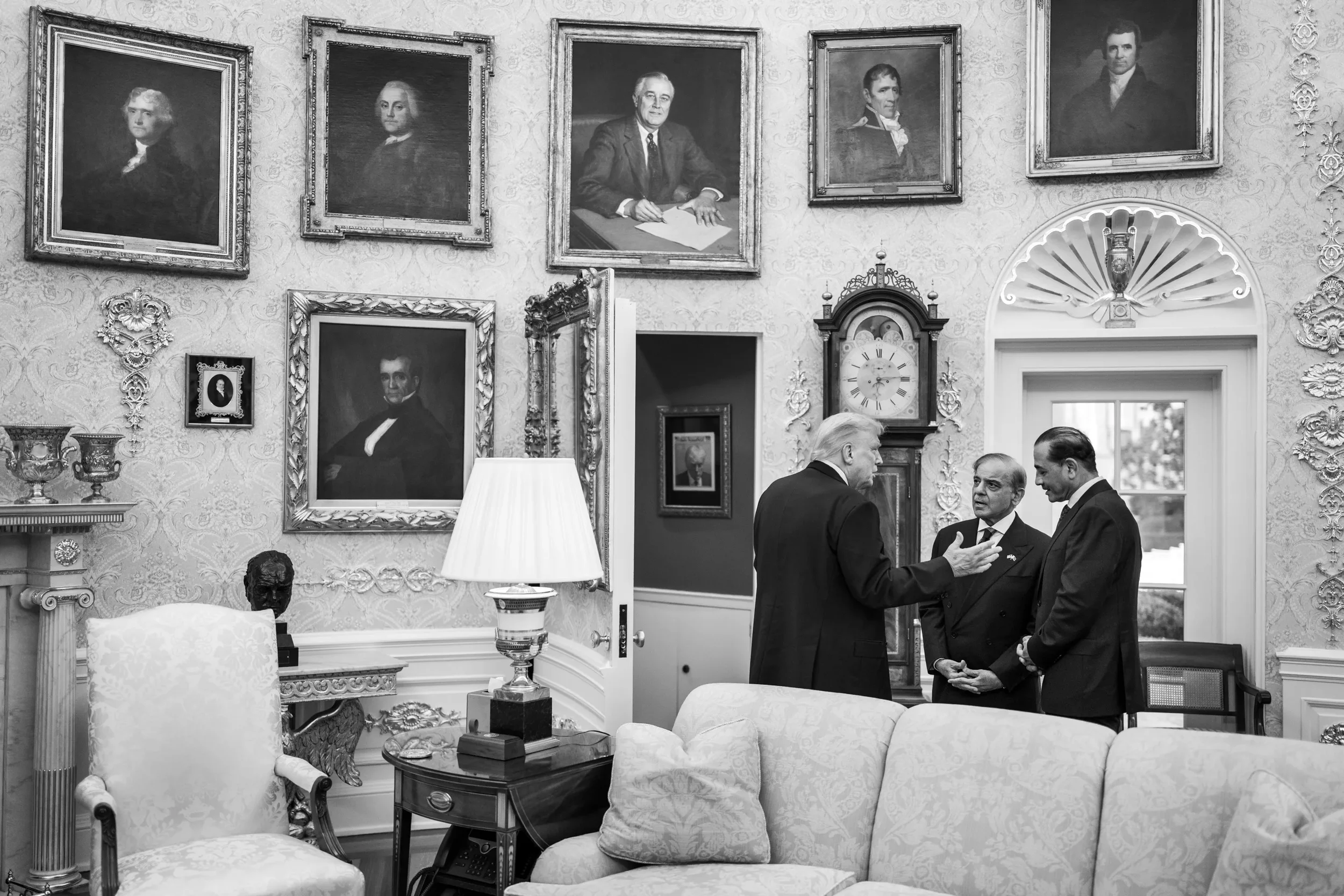
Source: The White House
At an April 15th press conference concerning the war in Iran, White House Press Secretary Karoline Leavitt said a second round of in-person talks would “very likely” be held in Islamabad because Pakistan was the “only mediator” between the U.S. and Iran. Earlier that week, as U.S. and Iranian envoys gathered in Islamabad for the first round of negotiations aimed at ending the U.S.-Israeli war with Iran, another question dominated headlines: how did Pakistan—once dubbed the United States’s “ally from hell” by The Atlantic—emerge as the sole mediator between two nations that had not held official face-to-face talks since 1979?
The flurry of headlines has converged on a similar narrative: Pakistan’s national security interests, its historic relationship with the U.S., its cultural affinity with Iran, and its regional geopolitical ambitions have positioned the country as a prime interlocutor for the talks. However, less attention has been paid to Pakistan’s duplicitous roles of playing peacemaker in the Gulf while quietly escalating a covert war with Afghanistan.
These juxtaposed realities set a grim precedent for the future of conflict mediation. As the liberal international order fades, an alternative system is emerging. Countries with vested interests in regional conflicts and access to powerful world leaders jockey for control over peace negotiations. Such an arrangement risks producing half-baked settlements and a splintering of war and peace in which unresolved tensions fester beneath fragile ceasefires, requiring only a spark to reignite.
Pakistan’s Double Game
Pakistan’s ascension as an intermediary between the U.S. and Iran stems from a convergence of geography, diplomacy, and strategic interests. Sharing a 900-kilometer border with Iran, Pakistan has direct stakes in preventing regional spillover. Pakistan is home to the world’s second-largest Shia population after Iran, making sectarian stability a domestic imperative. Yet Pakistan’s substantial Shia population and deep cultural and historical ties with Iran also anchor their relationship. Iran was among the first Muslim-majority countries to recognize Pakistan after its independence in 1947, and the two states share mutual security interests. As one of the few regional countries not to host an American military base, Pakistan earned another degree of credibility in Iranian eyes.
Since the mid-twentieth century, Pakistan’s relationship with the U.S. has been shaped less by shared ideology than by a shifting landscape of interests. After the Soviet invasion and occupation of Afghanistan (1979–1989), Washington viewed Pakistan as a key Cold War ally. Following the September 11th attacks, Pakistan became an indispensable partner in the Global War on Terror. Simultaneously, Islamabad maintained a covert relationship with the Taliban, believing a Pakistan-friendly government in Kabul would help prevent refugee flows and counter Indian influence. Despite decades of volatility, the personal rapport between President Trump during his second term and his “favorite field marshal,” Asim Munir, ushered in an era of unprecedented cooperation.
As U.S.-India relations have deteriorated to an all-time low, the Trump administration has grown closer to Pakistan as a strategic alternative. The White House signaled this shift by hosting Munir in June 2025—the first time a U.S. president received Pakistan’s army chief without accompanying civilian leadership. The relationship reflected a broader pattern of personal reciprocity. Pakistan nominated Trump for the Nobel Peace Prize, joined Trump’s so-called Board of Peace, signed an oil development agreement, and partnered with Trump-linked cryptocurrency ventures. While Islamabad framed its diplomacy as peacemaking, its growing proximity to the Trump administration has fueled speculation about the dividends Pakistan expects from its role as mediator.
Pakistan’s double game reflects a longstanding pattern of duplicitous foreign policy objectives. It has capitalized on a temporary convergence of strategic interests and its close relationship with President Trump to achieve a diplomatic role no country had occupied since the 1979 Iranian Revolution.
However, Pakistan’s ongoing shadow war with Afghanistan casts a shadow over its neutrality as an interlocutor. By declaring “open war” against the Taliban regime over alleged support and sheltering of the Pakistani Taliban, Pakistan has escalated its campaign from isolated border skirmishes to targeted airstrikes inside Kabul. In March 2026, Pakistani airstrikes destroyed a rehabilitation clinic in central Kabul, causing over two hundred civilian casualties. For Afghan civilians who have endured decades of various iterations of occupation and proxy warfare, the idea that Pakistan could serve as a neutral intermediary in regional conflicts is an obscene gesture.
The New World Order and the Splintering of Peace
Pakistan’s declaration of open war against the Afghan Taliban exposes the fragility of its double game, setting a dangerous precedent for the future of conflict mediation. The Islamabad Talks provide Pakistan with a prime opportunity to rehabilitate its image and reassert regional relevance. While the international community fixates on the peace negotiations, it tacitly legitimizes Pakistan’s belligerence in Afghanistan. This dynamic lays the foundations for an emergent world order in which conflict mediation becomes less about neutral arbitration and more about geopolitical leverage, transactional relationships, and access to powerful leaders.
Even if Pakistan succeeds in brokering sustainable peace between the U.S. and Iran, the broader implications remain troubling. Pakistan’s mediating role awarded it tacit legitimacy, if not outright diplomatic cover, to intensify military operations in Afghanistan. These juxtaposed narratives signal to other ambitious middle powers that the combination of strategic leverage, regional stakes, and privileged access to powerful world leaders can elevate them into the role of peacemaker while shielding their own parallel conflicts from scrutiny. The future of diplomacy will produce a splintering of peace—a cyclical scheme where “neutral” countries scramble for influence amid war rather than genuinely trying to end it.
Critics will argue that the Islamabad talks demonstrate the value of third-country mediators in an era where international organizations face waning relevance. Pakistan’s peripheral status and relationships with both parties allowed it to establish bilateral trust that traditional powers could not achieve. In a multipolar world, middle powers may increasingly fill the diplomatic vacuum left by weakening international institutions.
The international system is undergoing profound changes. Great-power confrontation has returned, old alliances and institutions are weakening, and personal relationships among political elites increasingly shape the rules of engagement. Countries with a stake in the outcome of a conflict should not automatically be excluded from mediation if they are best positioned to halt bloodshed. However, mediation without accountability risks normalizing a world where states can simultaneously escalate one conflict while earning prestige for managing another. Future peace processes must therefore incorporate stronger mechanisms for transparency, multilateral oversight, and adherence to international law. Regional mediators should be held accountable for their own domestic and foreign policy behavior rather than being granted blanket legitimacy for delivering negotiations. Otherwise, peace itself risks becoming peripheral to the strategic motives of the peacemakers.